ACOUSTICS
Detailed specs and info about all models can be found here.
The Inspiration
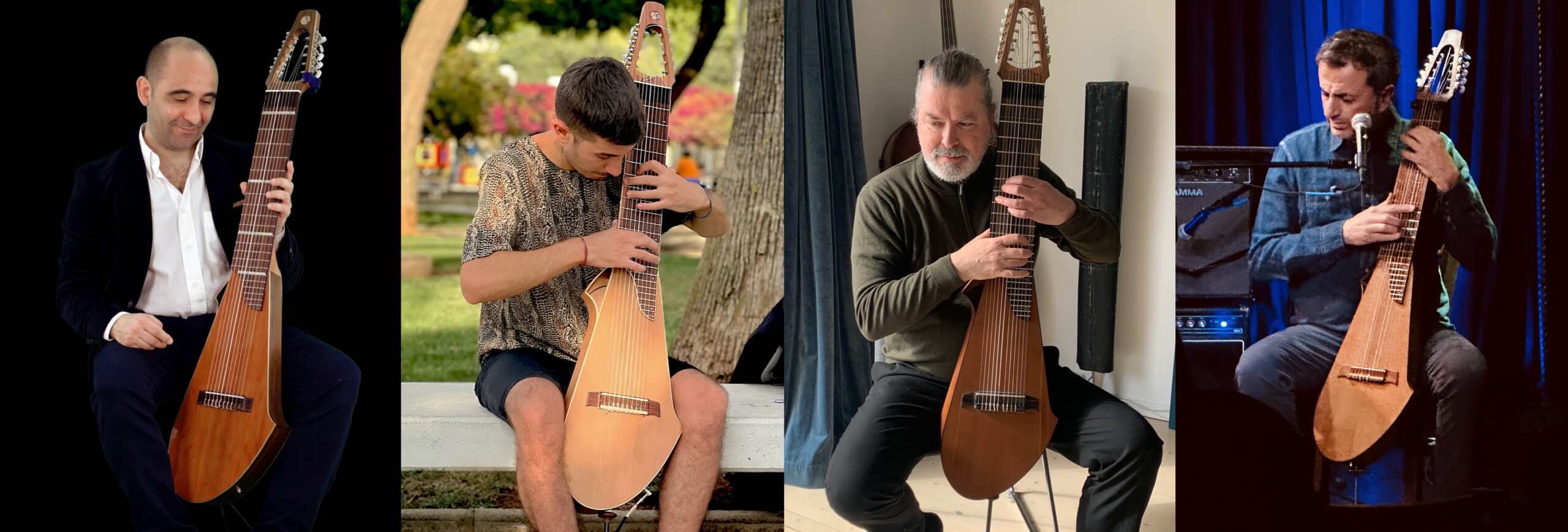
Our first acoustic tapping instrument was made around 1998, but for many years remained just an initial attempt, probing the possibilities and confirming the viability, but nothing more. There are a couple of factors in particular that made an acoustic tapping option attractive to us: Firstly, practising unplugged with any electric instrument is usually a less than optimal experience, and it can be a nuisance to always have to plug in to an amp or use earphones. Secondly, the mellower sound of tapping with nylon strings has always had a certain allure to it, sounding more like an instrument from past centuries. After the production of our early electric models (around 2010) it was only natural to go back and experiment with the idea of an acoustic, nylon-string instrument designed especially for tapping.
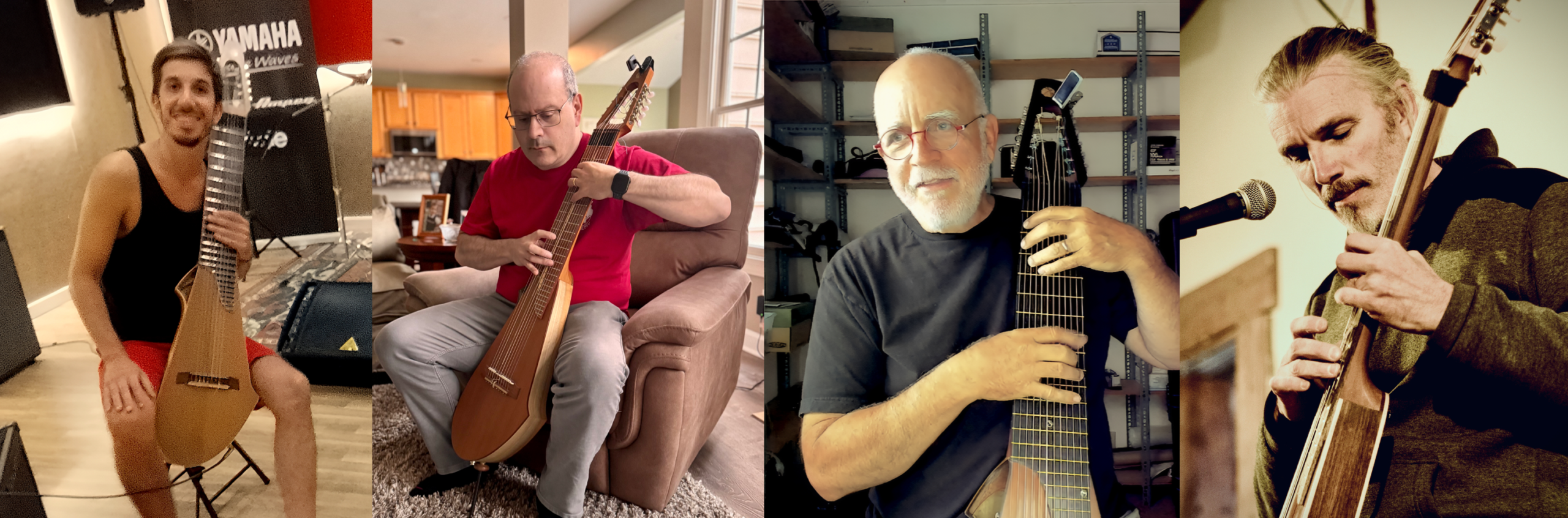
With a couple of smaller prototypes under our belt (and some very rough videos trying to promote the idea) we eventually got a single order … but it was later cancelled due to financial woes! Thankfully Rodrigo Serrão (in 2019) was brave enough to take the plunge and ordered a 10-string version. Subsequently he and Mike Hoegeman were instrumental (no pun intended!) in moving us toward the more stickist friendly 10 & 12 string configurations. From there we have continued the evolution, refining and expanding the design in the pursuit of the best possible acoustic tapping experience for players all over the world.
The Design
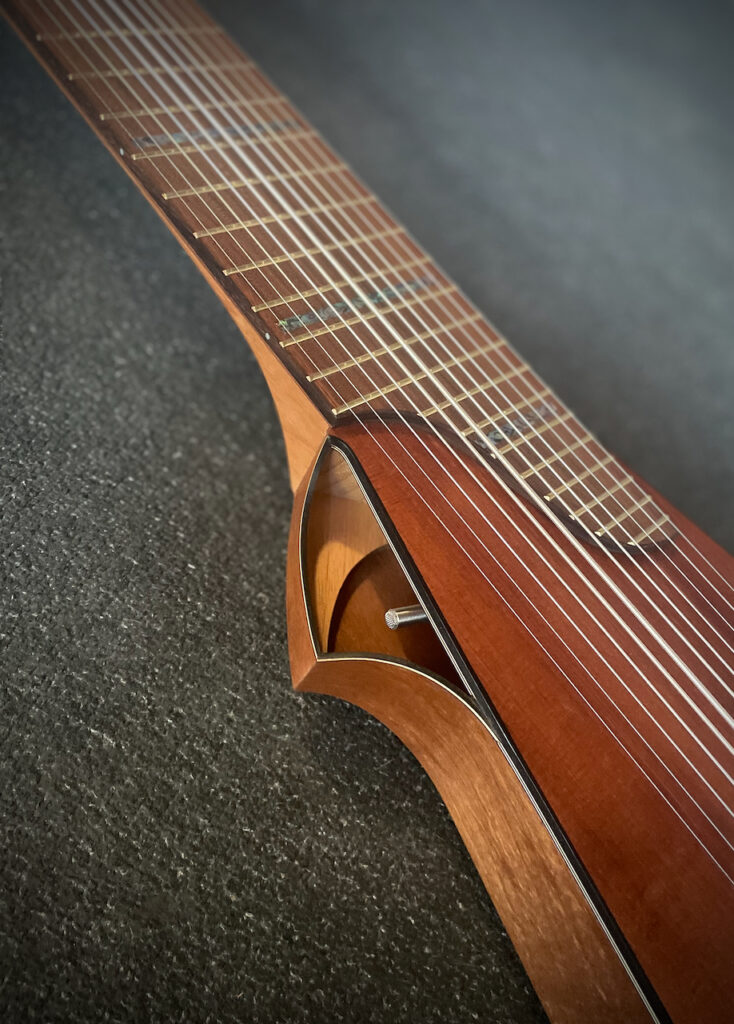
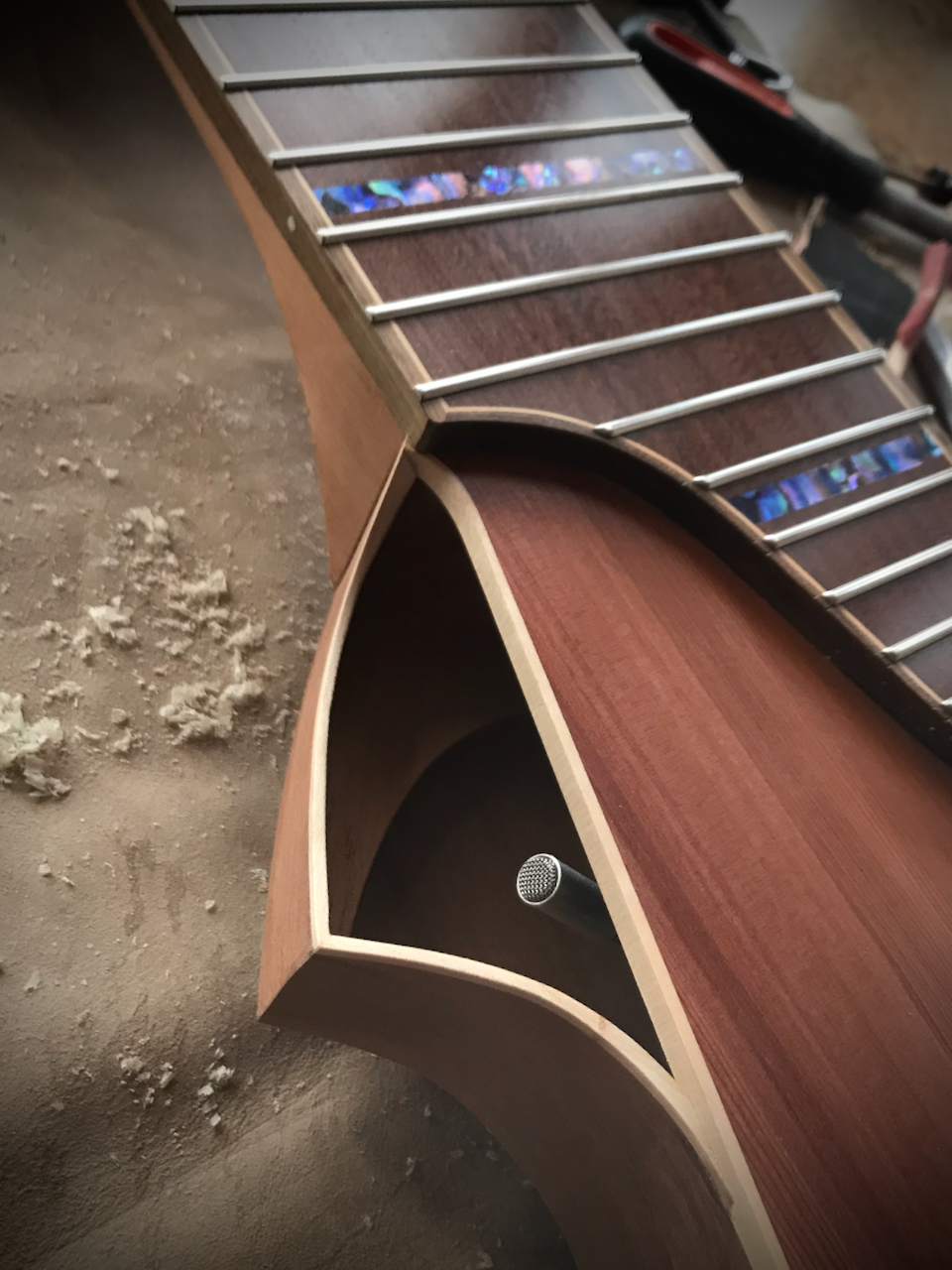
Our acoustic models are designed primarily to be played while seated, with the instrument between the legs, cello style. The adjustable endpin/spike maintains the instrument at an appropriate playing height, and with the latest iterations (as of 2025) this carbon fibre tube can also act as a rigid central structure for mounting to an external stand for strap-free playing in a standing position (ask us for details!). A strap can also be used in various ways, but this will all depend on the individual players approach (addition of strap buttons required!).
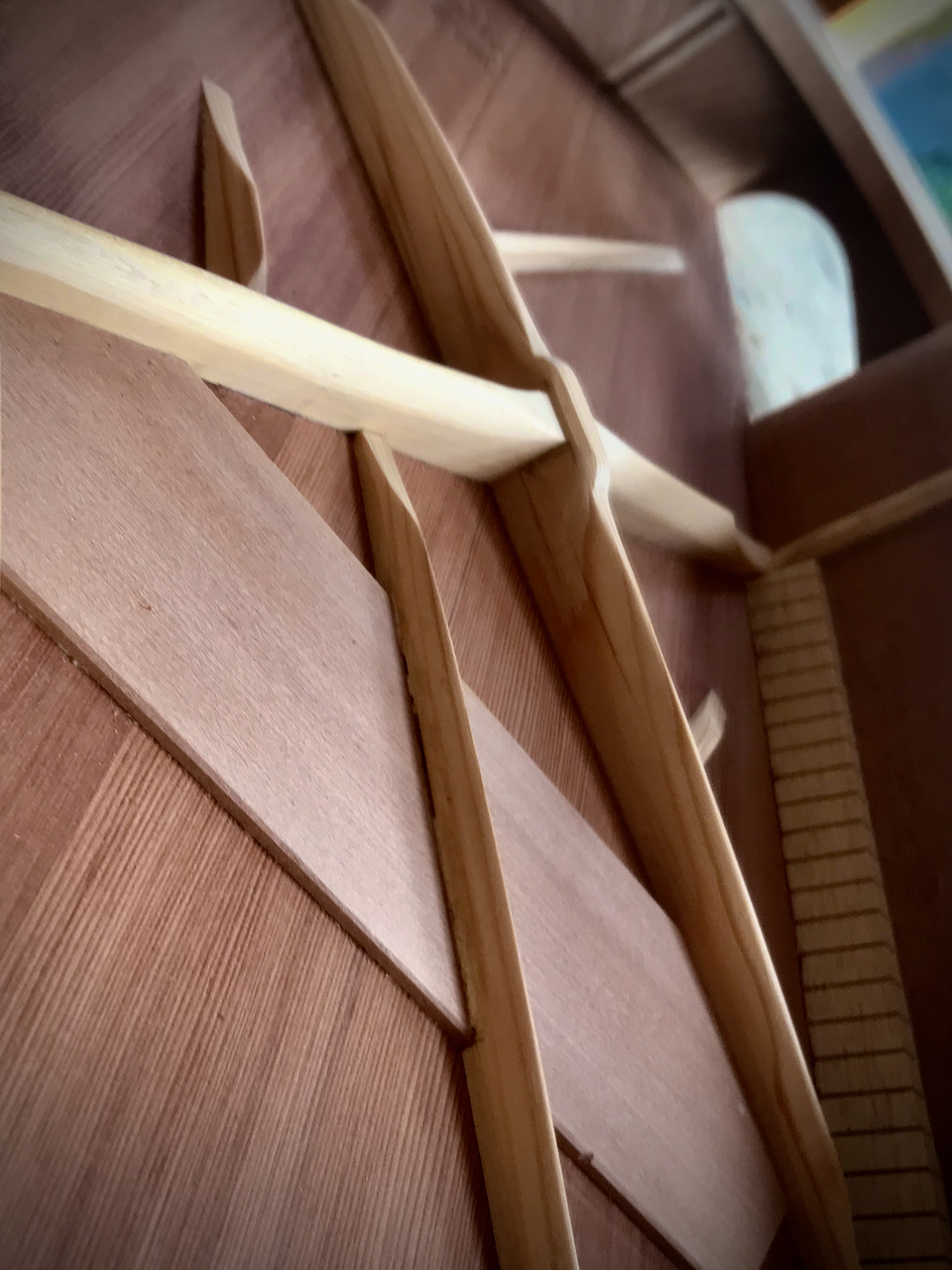
Within the constraints of physics (and available strings!) these models endeavour to optimise the acoustic response elicited from the tiny vibrational energy generated from each tapped note. Because this energy is so low (compared to say plucking or strumming or bowing) the consequential noise of the impact of the fingers themselves and/or the ‘string squeak’ generated is proportionally greater and can be distracting when amplified. These generally undesirable noises can be minimised by a combination of controlled technique and the use of flat wound strings where appropriate …the rounder sound of ‘broken-in’ bass strings also tends to be more favourable. Any tuning configuration is possible with notes (at fret 0) between B0 and D4.
The acoustic sound is very pleasant, projecting a warm and balanced tone over the whole range. Admittedly the overall acoustic volume produced is relatively low (compared to say a regular guitar), but still more than adequate for practising or playing together with another quiet instrument. It’s most likely that at some stage you will want to amplify the instrument so a K&K Pure Classic pickup is installed as standard issue, with the possibility of adding the K&K Trinity internal condenser mic, and/or combining with the UltraTonic anti-feedback circuit as optional extras.
The Building Process (and beyond)
Each instrument is handcrafted one at a time. While this is a deliberately slow, one man process, it ensures that attention is given to each clients needs. Once we have settled on the woods to be used from our limited yet focused selection of well seasoned timbers, the build usually takes around 3 months from start to finish. There is however a short waiting list, with an approximate wait time of somewhere between 12-15 months before your instrument can be started. A non-refundable deposit of $600 is required to get on that list and maintain your place in the queue.
Once your build has been initiated you can expect regular photo/video updates until its completion. Shipping and payment options will be discussed and organised as the process moves forward. At any time you should feel free to ask Mark about any details of your build. There’s also a growing (though admittedly clumsy) body of info to be found by joining our Facebook ‘DF-Acoustic’ group, and a large collection of albums and photos of finished instruments associated with our Facebook page.
Your finished DF-Acoustic will be a fine and sensitive musical tool, and as such will require a certain amount of care to ensure years of enjoyment to come. A small amount of seasonal movement in woods is normal (for example a degree of ‘fret sprout’ can probably be expected sooner or later, and over the years you may also notice minor ‘creep’ in some non-critical glue joints). Prolonged exposure to high or low temperatures/relative humidity should be avoided. We thoroughly recommend using some sort of humidity control system with your instrument. The double-action truss rod is there to provide a degree of adjustability for neck relief, however in most cases this will not be an issue to fuss over it. A nylon string instrument like this is much more forgiving in both intonation and action than its electric counterpart. Regular wiping down of the strings and neck after playing will help prolong string life and maintain the natural finish, and occasional application of beeswax paste (or similar) followed by buffing will also be beneficial.
CONTACT US
Have any questions or ideas about an acoustic instrument for yourself or someone else?
Don’t hesitate to get in touch.